


















A ShinyHunters comeback claim hinges on two revoked keys.
Operators using the ShinyHunters name announced their return on a Tor leak site that went live Nov. 23. The original site had gone offline after arrests of suspected associates.
The identity of the new site’s operators remains unverified. Meanwhile, researchers tracking a former ShinyHunters affiliate found that its voice-phishing attacks are still active.
What the ShinyHunters signatures verify
BleepingComputer verified two messages signed with ShinyHunters keys created in 2020 and revoked in March 2026. The signatures show that the signers had access to the old private keys. The November messages the outlet examined contained no signature made with the March replacement key.
The operators posted their announcement in English and Russian and distanced themselves from people they described as impostors. In September, Dutch police arrested a suspected ShinyHunters associate. Earlier in November, a seller claiming ties to ShinyHunters advertised purported Binance user data, a claim the exchange disputed.
The announcement also outlined plans to rebuild parts of its infrastructure, including introducing a new CDN for hosting stolen data, abandoning previous backup servers, and moving communications to its new Tor-based leak site and an Exploit forum account.
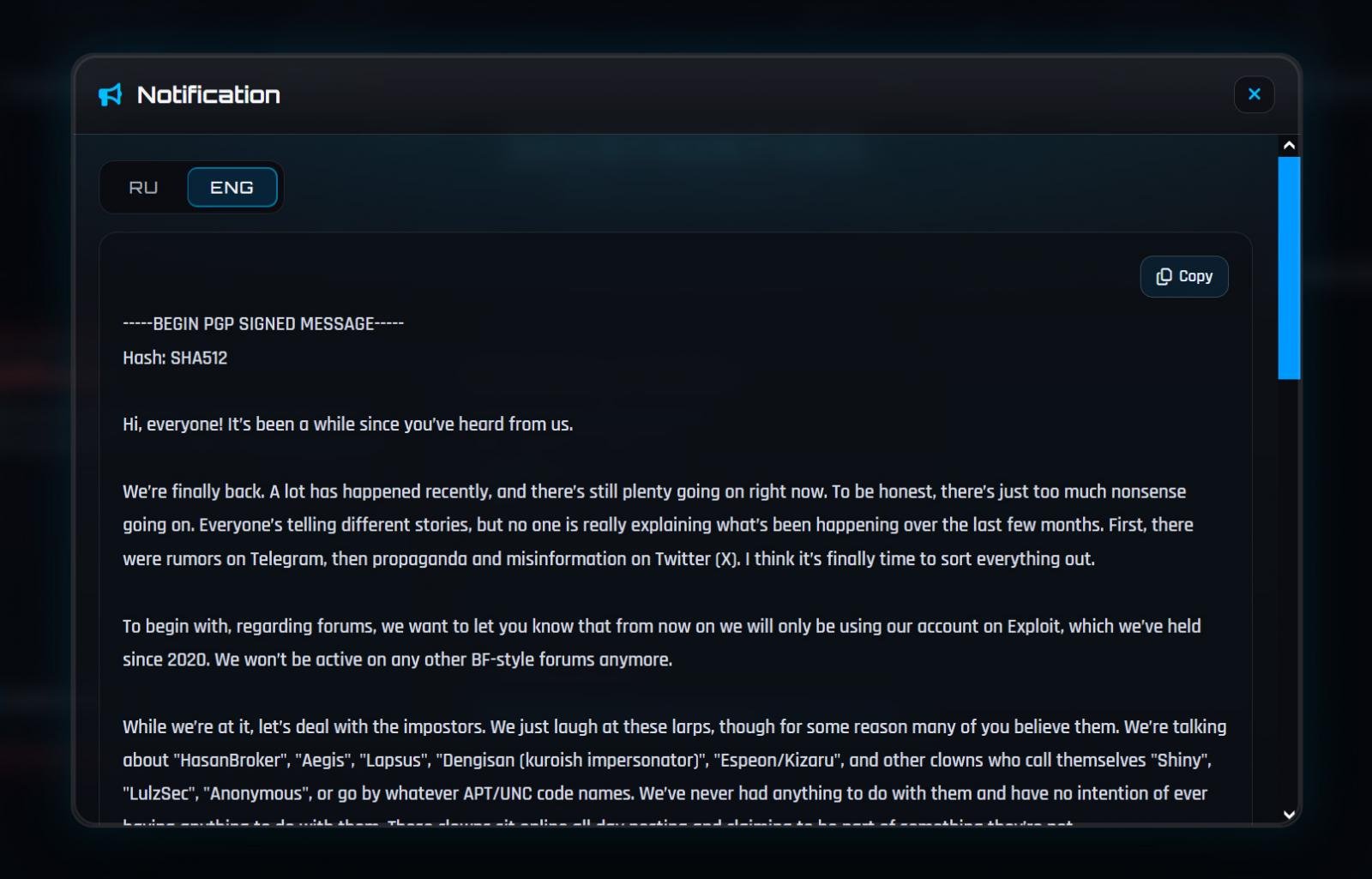
"To be honest, there’s just too much nonsense going on. Everyone’s telling different stories, but no one is really explaining what’s been happening over the last few months," the group wrote.
What Okta found on the INCEPTION leak site
Okta Threat Intelligence first observed INCEPTION, a separate extortion site, on Nov. 16. Several organizations listed there had already been targeted by phishing infrastructure tied to O-UNC-053, a cluster previously affiliated with ShinyHunters.
Okta assessed that the cluster had very likely changed its brand affiliation. Researchers could not determine with high confidence whether the cluster runs INCEPTION or works with another extortion actor. INCEPTION’s operators denied being ShinyHunters on Nov. 24, The Register reported.
INCEPTION listed seven organizations: AMD, Cigna Healthcare, Paychex, PepsiCo, Henry Schein, AutoZone, and Lucid Group. As of The Register’s Nov. 23 report, none had confirmed a breach, and Okta said it could not authenticate the published data.
How security teams can reduce the risk of voice phishing
Okta says callers have impersonated support staff and pressured employees to reset passwords. The phishing kit researchers examined could collect credentials and prompt victims to share one-time codes or approve sign-in requests. Okta found that the kit could not bypass phishing-resistant methods such as FIDO2 passkeys or Okta FastPass.
Charter Communications confirmed a security incident earlier this year after ShinyHunters claimed it gained access through a phone call. The company did not confirm the group’s account of how it got in.
- Require phishing-resistant MFA for sensitive apps. Start with administrator and single sign-on accounts. Open the sign-in prompt and check what happens if you choose another method. If a one-time code or push approval still gets you in, the account has a fallback the caller can pressure someone to use.
- Verify password resets and new MFA enrollments. Before resetting a password or adding an MFA device, have the help desk verify the caller through a channel the company already trusts. If someone calls an employee claiming to be from IT, give the employee a simple rule: hang up and call the help-desk number in the company directory.
- Check identity logs after a reported call. Look for password resets, newly enrolled MFA devices, and unexpected sign-ins around the time of the call. If there are signs of account takeover, revoke active sessions and review access to connected apps.
Start with the time of the call. If a new MFA device appeared minutes later, check which apps the account opened next and whether it downloaded or exported anything. That gives you a starting point for deciding which teams to notify.
Read more: Voice phishing is one route to account takeover, and SpyCloud’s 2027 forecast explains why stolen sessions and trusted vendor connections are also on defenders’ radar.