

















FIFA is dealing with a data breach that could affect people who have never worked for the organization.
On Nov. 25, the international soccer governing body confirmed to The Record that hackers had gained unauthorized access to what it described as a “limited set of personal and business information.” It said it was working with authorities, including law enforcement.
An independent examination of the reportedly stolen documents offers a more detailed picture of the exposure.
Researchers find evidence of a bulk download
A newly emerged cybercriminal group calling itself the Handsome Boy Hacking Club claimed to have stolen more than 12 GB of data from FIFA. It subsequently published the material on a cybercrime forum following an unsuccessful extortion attempt.
Cybersecurity firm DarknetSearch obtained a copy of the collection and published its findings on Nov. 24. Presentations and videos accounted for approximately 83% of the data volume.
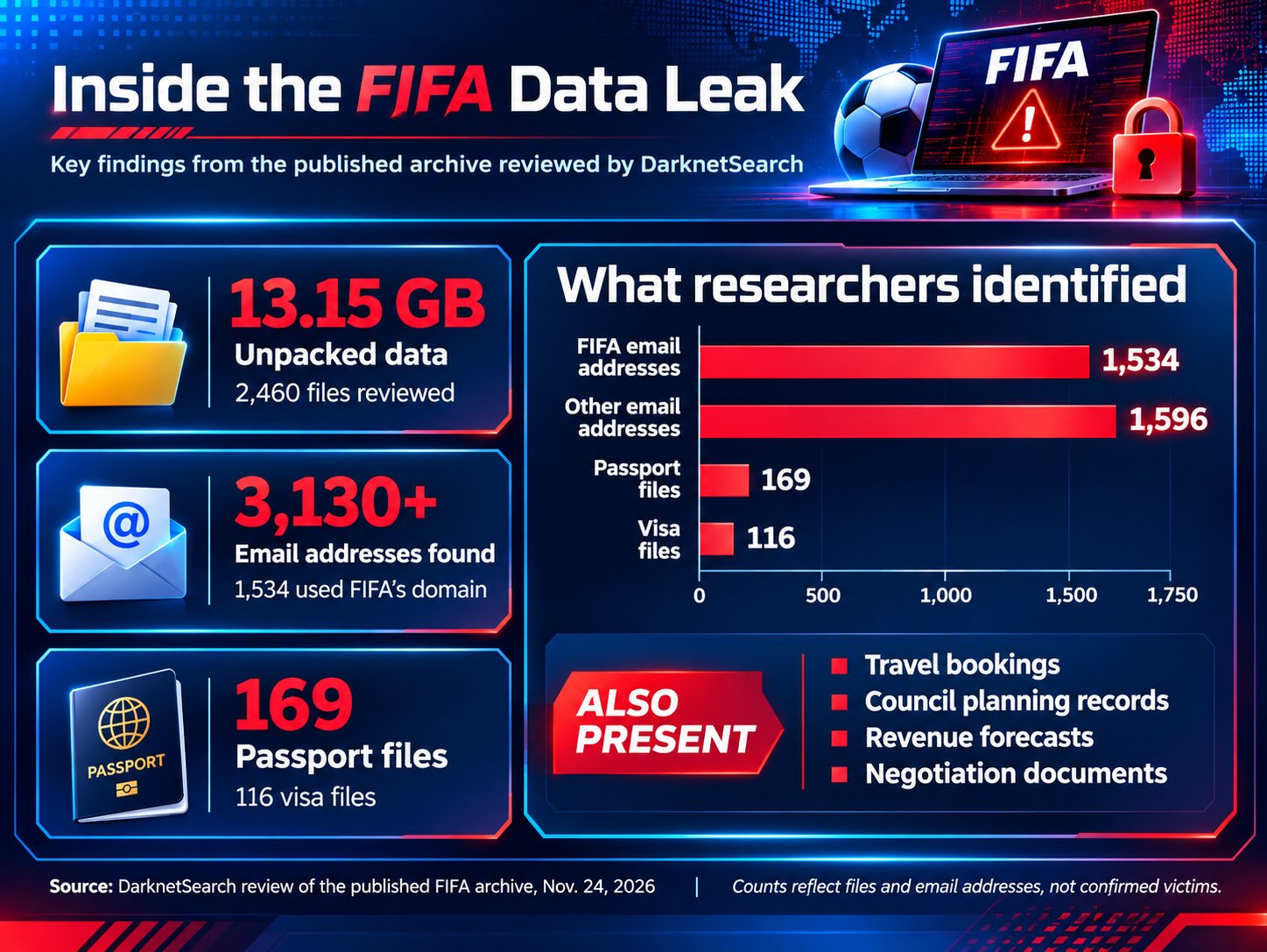
Document properties and 30 failed-download notices dated Nov. 12 pointed to a bulk download from a Microsoft 365 environment, nine days before the group published the archive.
Researchers identified genuine FIFA working documents within the collection, but they have not established whether the material came directly from the organization's systems or through a third party.
Sensitive records extend outside FIFA's workforce
Email addresses associated with tournament organizations, continental football confederations, and commercial entities appeared throughout the collection. FIFA works with 211 national football associations across six continents.
Criminals could use passport and visa information to impersonate document holders or submit fraudulent applications requiring proof of identity. The organization routinely collects such information from people outside its workforce, including journalists applying for media accreditation at its events.
Additionally, travel bookings and council meeting plans covering November and December 2026 could reveal the whereabouts and schedules of FIFA officials. Access to unpublished revenue forecasts and negotiation documents could also give unauthorized parties insight into the financial expectations and bargaining positions of FIFA and its business partners.
Security teams should test detection of small, sensitive downloads
While presentations and videos made up most of FIFA's leaked archive, hundreds of identity documents occupied just 69 MB, or approximately 0.5% of the total data volume. Even a fraction of the stolen collection contained enough personal information to facilitate identity fraud.
Organizations storing similar records in Microsoft 365 should examine whether their security controls can detect the removal of confidential documents without relying on large transfer volumes. Security teams can test their monitoring through a controlled exercise.
- Simulate a sensitive download. Populate a restricted SharePoint test library with fictitious passport scans. Apply the same security policies and sensitivity labels used for actual personnel records. Use an authorized test account to download a batch below your existing volume-based alert threshold.
- Verify detection. Search the Microsoft Purview audit log for the corresponding FileDownloaded events. Check whether investigators can identify the account, individual documents and download times. Determine whether the activity generated an alert.
- Address monitoring gaps. If the transfer appears in audit logs without triggering an alert, review your data loss prevention and cloud activity monitoring rules to account for document sensitivity and storage locations. Repeat the exercise to verify the changes.
Security teams should be able to distinguish between an employee downloading routine training materials and an account removing hundreds of confidential identity documents, even when the latter involves considerably less data.
More cybersecurity news: ShinyHunters may be attempting a comeback after recent arrests, with new messages appearing on a Tor leak site.