
















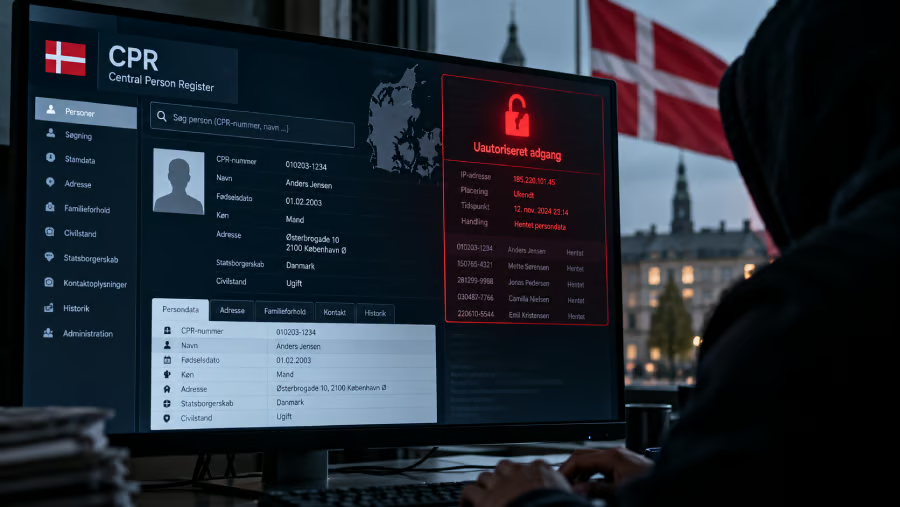
Personal data tied to about 8.8 million people was accessed without authorization through Denmark’s Central Person Register, including names, addresses, and CPR numbers.
Officials detected irregular activity on Oct. 2 and traced the searches back through September. Investigators say the activity involved legitimate CPR access belonging to a private Danish company rather than a confirmed direct compromise of the national registry itself.
Authorities have not identified who was behind the access or disclosed what happened to the information collected.
Registry records extend beyond current Danish residents
Names and addresses, along with CPR numbers, were among the information accessed. People registered for name-and-address protection were excluded from that portion of the unauthorized access.
CPR contains records for about 11 million registered people, including current residents as well as people who have moved abroad or died. Affected records therefore are not limited to people currently living in Denmark.
Automated searches ran through legitimate company access
An unnamed private Danish company’s legitimate permission to search CPR was used without authorization. Investigators have not reported a direct compromise of the registry itself.
Denmark’s Data Protection Agency reported a very large number of automated searches intended to identify valid CPR numbers. Investigators have not disclosed how the company’s access was compromised or misused, or what happened to information collected through the searches.
CPR administrators shut down the company’s access after detecting the activity. Police are investigating, and officials have started a wider security review of access to the registry.
CPR exposure changes what affected residents can trust
If your information was among the records accessed, someone knowing your name, address, or CPR number should not be enough to earn your trust. Attackers can work real personal details into phishing messages that appear to come from a bank, government agency, or another organization you already deal with.
Voice phishing can be even more persuasive when a caller already has accurate information. Someone could repeat your address or CPR number to establish credibility before asking for additional details, directing you to a login page, or trying to get you to approve an authentication request. Recent vishing incidents have shown how leaked information can support convincing phone-based scams.
CPR details are identifying information, not proof that someone is who they claim to be. Customer support and account-recovery processes that rely on personal details should use another form of verification, such as an authenticated account session or a separate trusted channel.
Denmark’s security guidance for the incident gives affected residents several practical steps:
- Verify unexpected contact through an official app, website, or known phone number rather than trusting the details a caller or message already has.
- Do not share MitID information, passwords, or payment details in response to unsolicited contact.
- Treat unexpected authentication requests with caution, especially when someone is pressuring you to approve them.
- Consider creating a credit warning in CPR to reduce the risk of someone seeking credit in your name.
Authorized access also needs stronger limits behind the scenes. High-volume searches from legitimate accounts should be monitored and stopped when activity falls outside normal use, before one set of permissions can be used to collect data at this scale.
More on data breaches: Over 95,000 customer emails were exposed after a generative AI-assisted program failed to hide recipient addresses in a bulk mailing.