











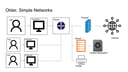





For years, organizations treated operational technology (OT), Internet of Things (IoT), and embedded devices differently from traditional IT assets.
Many of these systems were designed to operate for decades with minimal changes, often in environments where patching or replacing hardware is difficult.
That long operational lifespan has created a growing cybersecurity challenge as aging software collides with rapidly evolving threats.
Today, embedded device security is no longer simply about applying patches.
Organizations need continuous visibility into the software, firmware, and third-party components powering long-lived systems to manage risk effectively.
Key Takeaways on Embedded Device Security
- Long-lived embedded devices face growing cyber risk as aging software meets modern threats and AI-accelerated vulnerability discovery.
- Traditional asset inventories, vulnerability scanners, and SBOMs often lack the visibility needed to accurately assess embedded software risk.
- Binary-level analysis provides a more reliable foundation for identifying software components, vulnerabilities, and hidden dependencies.
- For OT, IoT, and other embedded systems, continuous visibility, risk-based prioritization, and compensating controls are often more practical than frequent patching.
Legacy software creates modern security risks
Many industrial controllers, medical devices, telecommunications systems, and critical infrastructure products deployed more than a decade ago remain operational today.
While the hardware continues to function, the software inside those devices was built for a vastly different threat landscape.
According to Matt Wyckhouse, CEO of Finite State, three major shifts have transformed the risk environment:
- Devices have become increasingly connected.
- Open-source components have accumulated years of vulnerabilities.
- Attackers have begun targeting embedded systems because they often present fewer security controls than enterprise IT environments.
Artificial intelligence (AI) is accelerating this trend.
AI-assisted reverse engineering and vulnerability discovery allow researchers — and attackers — to analyze firmware and uncover weaknesses much faster than in the past.
As a result, software that was once considered secure simply because it was old may now contain newly discovered vulnerabilities.
Visibility gaps make risk difficult to manage
One of the biggest challenges organizations face is understanding exactly what software exists inside long-lived devices.
Traditional asset inventories identify hardware models but typically provide little insight into firmware versions, embedded libraries, or third-party software components.
Meanwhile, development environments disappear, engineering teams change, and firmware versions diverge as updates are applied inconsistently across deployed fleets.
These visibility gaps become especially problematic when high-profile vulnerabilities emerge.
Without knowing which components exist inside deployed devices, organizations cannot quickly determine whether they are affected or prioritize remediation efforts.
Why traditional security tools fall short
Many organizations rely on vulnerability scanners, asset inventories, or a software bill of materials (SBOM) to understand product security.
While each provides valuable information, none offers a complete picture on its own.
Network scanners often struggle with embedded devices that cannot run security agents or respond reliably to active probes.
Asset inventories identify devices but not the software running inside them.
Even vendor-provided SBOMs may not accurately reflect what was ultimately compiled into the deployed firmware.
Wyckhouse mentions that the most reliable source of truth is the binary itself.
Analyzing deployed firmware directly enables organizations to generate more accurate SBOMs, identify vulnerable components, and continuously correlate new vulnerabilities as they emerge.
Shift from patching to continuous risk management
Unlike enterprise endpoints, many OT and IoT systems cannot be patched on a monthly schedule or replaced without operational disruption.
Instead, organizations should focus on maintaining continuous visibility, applying compensating controls such as network segmentation, and prioritizing vulnerabilities based on real-world exploitability rather than severity scores alone.
Security teams should also watch for common blind spots, including:
- Hardcoded credentials and embedded cryptographic keys
- Legacy debug interfaces and forgotten services
- Vulnerable statically linked libraries
- Bootloaders and pre-boot code that often escape routine security reviews
- Vendor documentation that does not accurately match deployed firmware
Automation is becoming essential
Regulatory expectations are also increasing.
The European Union’s Cyber Resilience Act (CRA), FDA cybersecurity guidance for medical devices, and broader software supply chain initiatives are raising cybersecurity expectations.
These requirements call on organizations to demonstrate ongoing vulnerability management throughout a product’s supported lifecycle.
Meeting those expectations manually is becoming increasingly difficult as vulnerability disclosures accelerate.
Organizations can strengthen long-term resilience by:
- Generating binary-validated SBOMs from deployed firmware
- Continuously monitoring firmware against newly disclosed vulnerabilities
- Using Vulnerability Exploitability eXchange (VEX) data to prioritize exploitable issues
- Requiring software transparency from suppliers during procurement
- Integrating vulnerability data directly into engineering and compliance workflows
As connected products continue operating for decades, securing them requires treating software as a continuously managed lifecycle rather than a one-time deployment.
Organizations can strengthen their security posture by combining accurate visibility with automated vulnerability management to support Zero Trust, prioritize risk, and meet evolving regulatory requirements.